
Ayesha Ikram
B2B lead generation trends 2026
EXECUTIVE SUMMARY
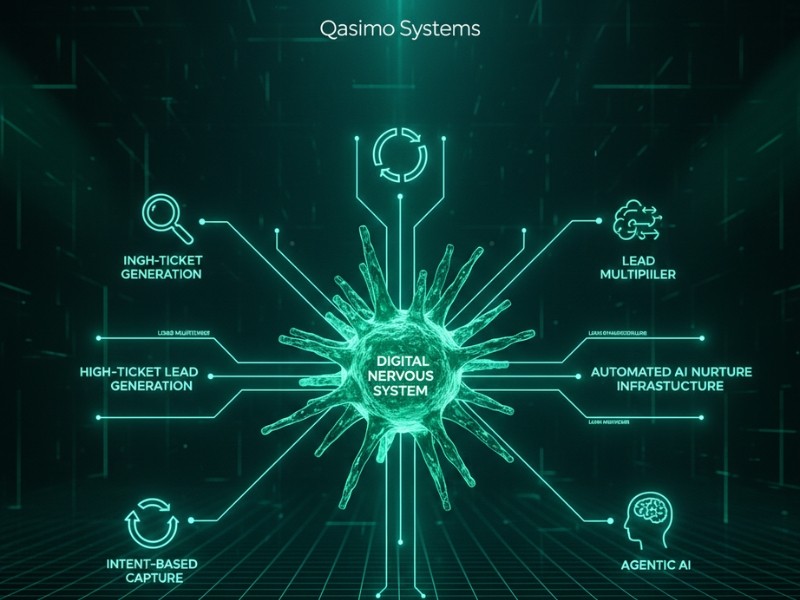
Once the internal architecture is in place, the question shifts from 'how do I sustain this?' to 'where do I direct my attention?' In 2026, the answer is not more content, more outreach, or more visibility effort. It is smarter infrastructure: systems that position you in front of high-intent buyers before they know they are ready to buy. This article maps the four-pillar Lead Multiplier system that replaces hustle with market intelligence.
You Have Built the Internal Architecture. Now Your Market Cannot Find You.
There is a moment that arrives for every practitioner who has successfully architected their internal operations — who has delegated the administrative layer, protected their cognitive prime, and encoded their methodology into functioning systems.
The moment sounds like this: 'I have the capacity now. Where are the clients?'
It is a more sophisticated problem than the ones we have examined in the previous posts. The infrastructure gap and the burnout trap are both internal problems — solved by better architecture inside your practice. The visibility gap is external. And in 2026, it is governed by rules that have shifted more dramatically in the past eighteen months than in the previous decade.
The practitioners who are growing their practices most efficiently right now are not the ones producing the most content. They are not the ones with the largest LinkedIn followings or the most active cold outreach sequences. They are the ones who have built visibility infrastructure that positions them precisely where high-intent buyers are already looking — and then lets the infrastructure do the work of being found.
In 2025, your prospects began asking AI before they asked Google. In 2026, the practices that get recommended by AI are the ones that built for it. Most of your competitors have not.
This is not a tactical shift. It is a structural one. And it requires a fundamentally different approach to how you build your authority presence.
The Three Ways a Brilliant Practice Becomes Invisible
Visibility failure in elite professional services does not look like obscurity. It looks like inconsistency — a presence that is impressive when discovered but difficult to find, intermittent in its authority signals, and structurally absent from the channels where your best prospects are now beginning their search.
Visibility Failure 1: The Search Displacement
In 2022, a prospective client looking for a consultant to help them scale their coaching practice would have typed a query into Google, reviewed the top ten results, and evaluated websites.
In 2026, a significant and growing proportion of that same buyer opens Perplexity, ChatGPT, or Claude and asks: 'What are the best frameworks for scaling a coaching practice without burning out?' or 'Who are the leading consultants in AI automation for coaches?'
These queries do not return a ranked list of websites. They return a synthesised answer — and the practitioners cited in that answer are the ones whose published content has been indexed, structured, and deemed authoritative by the AI's training and retrieval systems.
Analysis of AI citation patterns in professional services queries shows that cited sources share three characteristics: they answer specific questions directly in the first forty to sixty words of a section, they use consistent terminology across multiple published pieces, and they demonstrate depth on a narrow topic rather than breadth across many.
Most consultant blogs are written for Google — broad, keyword-dense, structured for click-through. They are structurally wrong for AI citation. The result: extraordinary expertise, rendered invisible to the channel where your next high-value client is looking.
Visibility Failure 2: The Intent Blindspot
Approximately 97% of the companies and individuals that visit your website will never fill out a contact form. This is not a conversion problem — it is a structural reality of how high-ticket buyers research. They read, assess, and compare across multiple touchpoints over days or weeks before making contact.
In a practice with no intent-monitoring infrastructure, those 97% are invisible. You have no way of knowing that the Head of Transformation at a mid-market consulting firm spent fourteen minutes on your case study page last Tuesday. You cannot know that three people from the same organisation visited your services page in the same week — a pattern that, in B2B professional services, is a reliable signal of internal evaluation.
These are not cold leads. They are warm prospects who have already self-qualified — who have already decided your content is worth their time — but who are not yet ready to make contact. In a practice without intent monitoring, they disappear.
The leads you are not capturing are not the ones who found you and were unimpressed. They are the ones who found you, were interested, and then received nothing — because your infrastructure had no way of knowing they were there.
Visibility Failure 3: The Zero-Click Extinction
Data from Sparktoro's 2024 search behaviour analysis showed that more than 58% of searches now end without a click — the answer is extracted directly from the search result, and the user moves on. This figure is higher for informational queries, which represent the majority of the searches your prospective clients conduct during their research phase.
If your content is not structured to be the extracted answer — if your expertise is buried in paragraph four after three sentences of preamble — you will not be cited. You will not be clicked. You will not exist in that moment of high-intent research.
The invisible cost of zero-click extinction is not just traffic. It is authority. Every time a competitor's content is extracted as the answer to a question your expertise could have answered better, that competitor gains a micro-increment of perceived authority in the mind of a buyer who will never know you had a better answer.

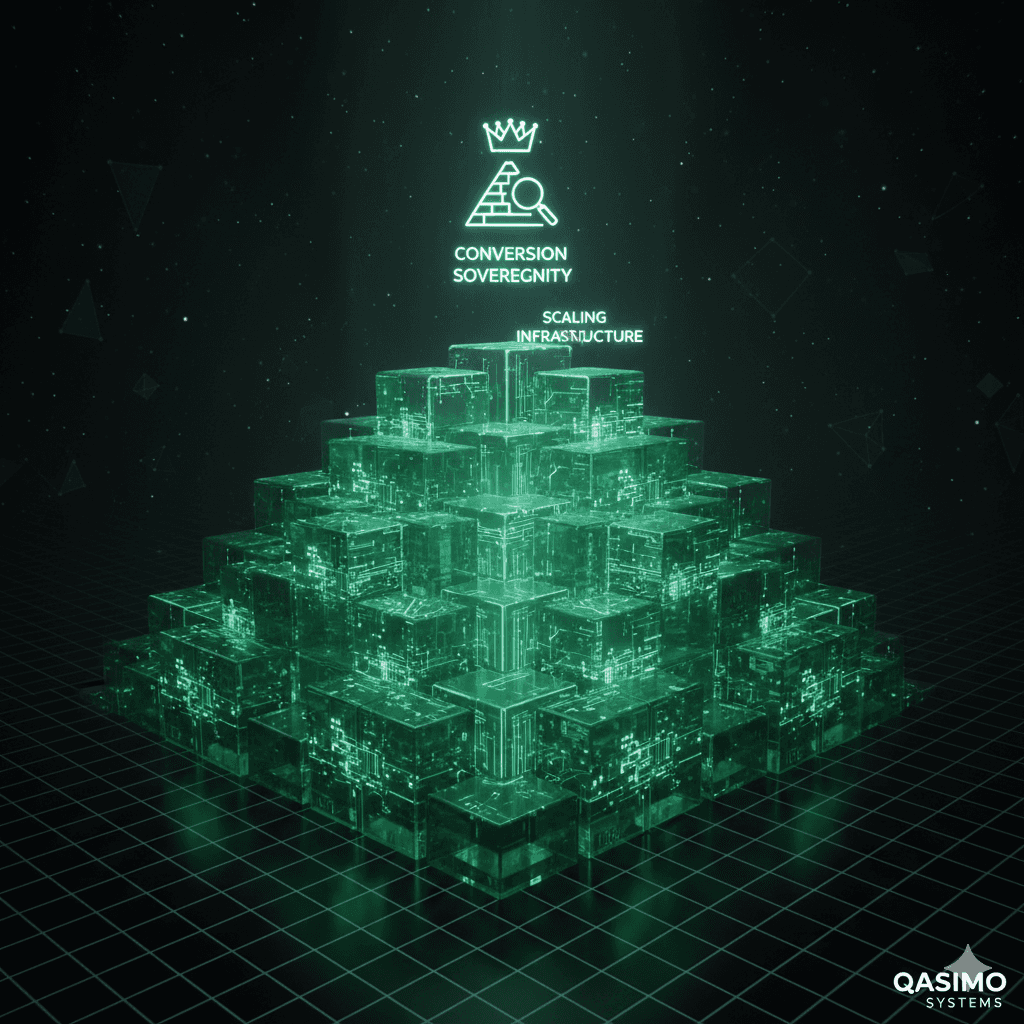
The Lead Multiplier: Four Pillars of Visibility Infrastructure
A Lead Multiplier is not a marketing strategy. It is an infrastructure system — one that operates continuously, positions your authority intelligently across multiple channels, and converts high-intent signals into booked conversations without requiring your manual involvement in the process.
It is built on four pillars, each addressing one of the visibility failures mapped above.
Pillar 1: Generative Engine Optimisation (GEO) — Being the Answer AI Cites
Trigger: Applied at the content architecture level. Maintained with each new publication.
GEO is the structural practice of formatting your published expertise so that AI systems — Perplexity, ChatGPT, Claude, Google's AI Overviews — retrieve and cite it in response to relevant queries.
The mechanics differ meaningfully from traditional SEO:
▸ Answer-first architecture: Each section of a GEO-optimised post opens with a direct, complete answer to the question that section addresses — within the first forty to sixty words. Preamble, context, and nuance follow. This is the inverse of how most professional content is written.
▸ Consistent terminology: AI citation systems weight consistency of language across multiple sources. If you use the term 'agentic infrastructure' across twelve published pieces, that term becomes associated with your authority in AI retrieval. Synonyms and variations dilute this signal.
▸ Depth over breadth: A single post that answers one specific question exhaustively is cited more frequently than a post that covers five related questions superficially. Your content strategy should be organised around questions your ideal client asks — answered completely, one question per post.
▸ Structured data signals: Schema markup, clear heading hierarchies, and explicit question-answer formatting increase the probability of being surfaced in AI-generated responses.
A GEO-optimised content library functions as a 24/7 authority signal — one that positions you as the cited expert in AI-mediated conversations happening between your prospects and AI assistants, at any hour, without your involvement.
Pillar 2: Intent-Based Capture — The Warm Prospect Infrastructure
Trigger: Continuous. Active across all website traffic.
Intent monitoring tools — including platforms such as Clearbit, Leadfeeder, and 6sense — identify the organisations and individuals visiting your website using IP resolution and identity matching. For a professional services practice, this transforms your website from a passive brochure into an active intelligence layer.
▸ When a prospect spends more than three minutes on your services page, the intent system logs the event and initiates a low-friction outreach sequence — not a cold email, but a contextually relevant piece of content delivered via LinkedIn or email that addresses the specific service area they were researching.
▸ When multiple people from the same organisation visit in a short window, the system flags this as a likely internal evaluation and routes it for personalised attention rather than automated nurture.
▸ High-engagement visitors — those who return multiple times, consume multiple pieces of content, or reach the booking page without converting — enter a priority sequence designed to reduce friction to the next step.
The distinction between this and cold outreach is critical: you are not interrupting strangers. You are re-engaging people who have already expressed interest through their behaviour. The conversion rate differential between intent-based outreach and cold outreach in professional services averages four to seven times, because the prospect's psychological readiness is already established.
Pillar 3: Agentic Nurture — The Invisible Sales Infrastructure
Trigger: Activated at first contact. Continues through the full client lifecycle.
Traditional CRM-based nurture operates on fixed sequences: email one on day one, email two on day three, email three on day seven. The logic is identical for every prospect, regardless of their behaviour, their context, or their demonstrated interests.
Agentic nurture is fundamentally different. The system reasons about each prospect individually:
▸ A prospect who opens three emails but does not click receives a different fourth touchpoint than one who clicks every link but has not replied. The system reads engagement patterns and adjusts the next action accordingly — not according to a fixed schedule, but according to the specific signals each prospect is giving.
▸ A prospect who downloads a framework and then visits the pricing page within 48 hours is identified as high-intent and routed to a direct, personalised outreach — not a nurture sequence, but a one-to-one message that treats them as the warm prospect they have demonstrated themselves to be.
▸ Dormant leads — prospects who showed strong initial interest and then went quiet — are reactivated with contextually relevant content at intervals determined by their historical engagement patterns, not by calendar logic.
The output of agentic nurture is a pipeline that is continuously warm — where no prospect ever simply 'falls through the cracks' because the system has no mechanism for forgetting.
Pillar 4: Demand Generation Before Lead Generation
Trigger: Embedded in content strategy. Measured by authority signal metrics, not just traffic.
The most sophisticated shift in high-ticket B2B marketing in recent years is the recognition that the goal of content is not to generate leads — it is to generate demand. The distinction matters:
▸ Lead generation captures people who are already looking. It is competitive, because your competitors are also capturing people who are already looking.
▸ Demand generation creates the category of need in the mind of a prospect who did not previously have a named problem. When a practitioner reads your post on the 'Invisible Ceiling of a Manual Practice' and thinks 'that is exactly what is happening to me' — they were not a lead before they read it. They became one because of it.
▸ Demand generation content is not promotional. It is diagnostic. It names the problem with precision, maps the mechanism by which it compounds, and establishes the author as the person who understands it best. The implicit message — that the author also knows how to solve it — does not need to be stated. It is established by the quality of the diagnosis.
A demand generation strategy, operating over six to twelve months, creates a body of work that pre-positions your practice in the minds of buyers who are not yet actively searching. When they do begin their search — when the ceiling becomes undeniable — you are already the name associated with the solution.
The practices that win in 2026 are not those who are most active in the market. They are those who have made themselves the inevitable answer to the question their best clients are beginning to ask.
From Hustle to Architecture
The shift from hustle-based lead generation to infrastructure-based visibility is not a small tactical adjustment. It requires reconceptualising what 'marketing' means for a practice at your level.
It is not a content calendar. It is not a posting schedule. It is not a cold outreach sequence.
It is an intelligence system — one that monitors intent signals, distributes authority content through the channels your best prospects actually use, nurtures relationships with the precision that your expertise deserves, and converts high-intent behaviour into booked conversations without requiring your personal involvement in each step.
The internal architecture covered in Future-Proofing and Scaling Without Burnout protects your capacity. The visibility infrastructure covered here fills it — not with random enquiries, but with pre-qualified prospects who have already encountered your expertise and decided it is exactly what they need.
There is one final piece. Once a prospect reaches your practice — once they have been through the visibility infrastructure, the intent capture, the agentic nurture — what do they actually experience? What does the trust-building process feel like from their side of the relationship? That is the conversation in Psychology of Systems.
READY TO BUILD YOUR VISIBILITY INFRASTRUCTURE?
A 30-minute deep-dive to identify exactly where your current visibility architecture is losing high-intent buyers — and how to build the infrastructure that captures them.
